Showing posts with label Ethics. Show all posts

Why there is reason for concern (and hope for improvement)

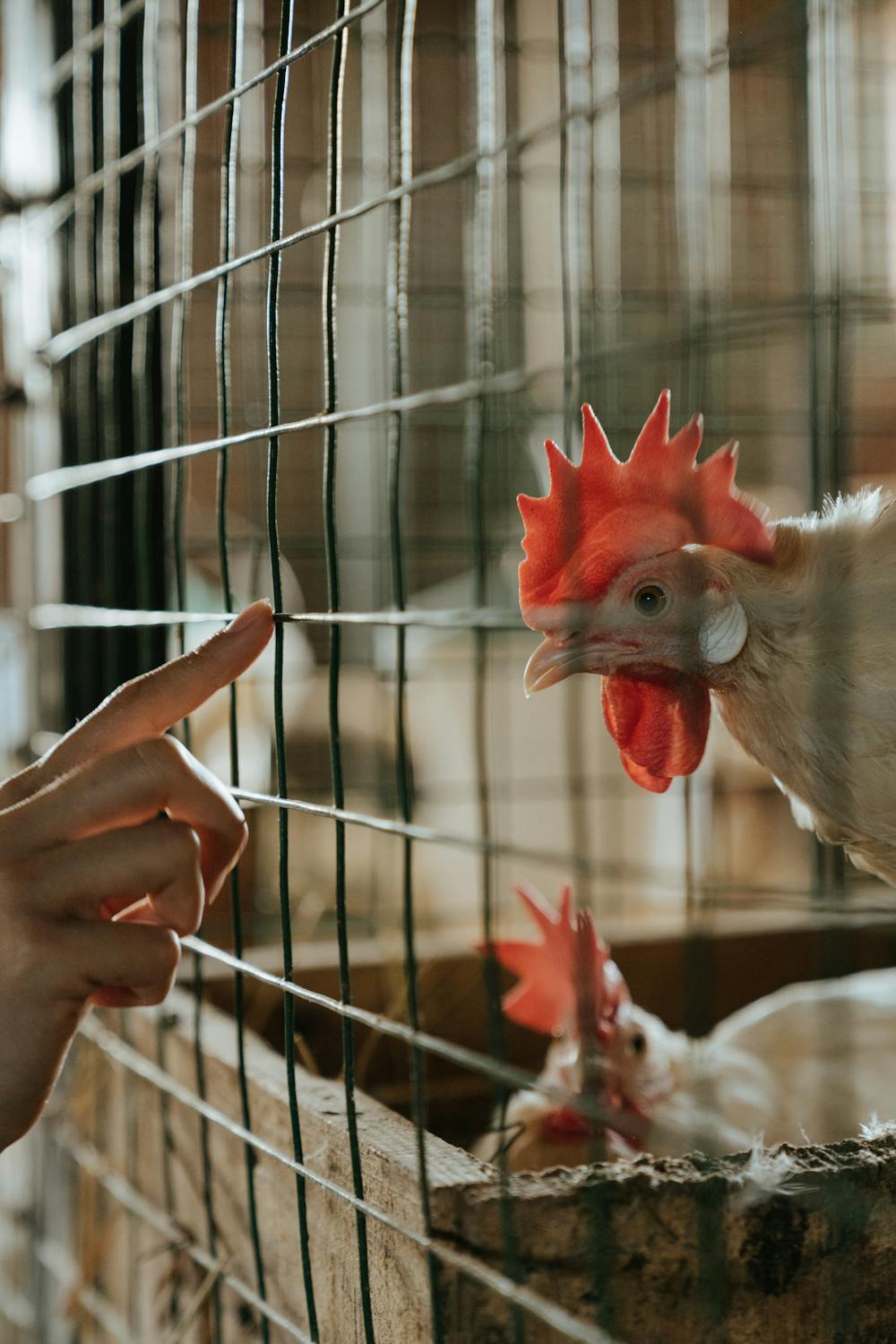
Although current practices in industrialized countries lack the deep-rooted reverence and ritualistic practices of ancestral communities during the acquisition and use of animal source foods, they can still uphold high animal welfare standards. Welfare standards provide a framework for ethical agricultural practices and challenge the assumption that mistreatment is inherent to all forms of animal husbandry. The latter view often arises from emotionally charged images propagated by animal rights activists who tend to neglect positive examples of responsible care. Nonetheless, much improvement is still needed and not all forms of animal production have a social license. This subsection is therefore to be seen as a call to avoid excessive commodification of livestock and to show respect for all participants involved in the production of food, including animals, farmers, butchers, and cooks. A two-fold approach may be needed: the continued improvement of animal welfare standards and practices, coupled with a revitalization of meaningful human-animal interactions. More holistic perspectives are needed that encompass animal welfare, responsible agricultural practices, and a reimagining of what animals could mean in contemporary societies, ultimately leading to more mindful and ethical approaches.

This subsection addresses the following three topics:
  • Ancestral versus contemporary models
  • Animals should not be seen as mere commodities
  • Rethinking human-animal interactions
_________________________________

  • Ancestral versus contemporary models

In ancestral communities, animal source foods were obtained and used with reverence and ritual, evident in hunting, herding, and sharing practices. This cultural connection between humans and animals is weaker in industrialized Western societies today. However, this change does not necessarily mean worse animal welfare compared to pre-industrial times. While some practices are criticized for cruelty, others set unprecedented standards. Welfare can even be better in intensive systems than extensive ones, at least in certain aspects. Be that as it may, industrialization tends to diminish the cultural position of livestock in modern thinking, affecting both animals and humanity.

Further reading (summary of the scientific literature): 

The provision of animal source foods (ASFs) in ancestral communities was characterized by reverence and ritual, both during their acquisition (hunt/kill) and use (sharing/consumption) [Leroy & Praet 2015, 2017]. Hunters ask forgiveness for the animal's death and symbolically render to nature what was taken from it, while pastoralists treat their herds respectfully. The kill is a moment loaded with meaning, whether during hunting or during sacrificial rites.
 
Cultural emphasis on such deep-rooted human-animal interactions is much weaker now in the industrialized West. This does, however, not necessarily translate into poor welfare conditions compared to pre-industrial practices. Although some practices are rightfully criticized for being brutal and disrespectful of animal lives, others maintain standards that are historically unprecedented. For some aspects, welfare in intensive systems can even be higher than in extensive systems. In some regions, extensive systems may come with more disease, predation, thermal stress, hunger, etc., despite presenting its own advantages [Temple & Manteca 2020]. Yet, industrialization comes with a price: it does dramatically impoverish the position of livestock in contemporary thoughtscapes and, hence, humanity [Leroy et al. 2020]

  • Animals should not be seen as mere commodities

The lack of direct exposure to farming and butchering processes in modern Western societies parallels a moral dilemma. Urban dwellers are uncomfortable with reminders of the animal origins of their food. Meat has been commodified and separated from its source, obscuring the human-animal connection. This trend is most prominent in Anglo-Saxon cultures and with animals perceived as 'cute'. Denial about the origin of meat persists as long as butchering scenes are hidden, causing emotional reactions when revealed. Ideological activists in mass media campaigns accentuate this by exposing the public to intense scenes. While animal welfare standards are widely adopted in the livestock sector, not all producers ensure animal well-being, and certain systems remain problematic. Some vocal vegan activists generalize about animal agriculture based on instances of malpractice, ignoring positive cases at the farm or slaughterhouse level.

Further reading (summary of the scientific literature): 

The absence of raw visual cues to the everyday practicalities of farming and butchering parallels much of the moral crisis in the post-industrial West [Leroy 2019; see also elsewhere]. Urbanites are at unease when confronted with reminders of the animal origins of their food [Leroy & Praet 2017]. Having become a cultural construct in an instrumentalist-reductionist framework, meat is subjected to commodification, homogenization, and hyper-separation, whereby human kinship with animals is obscured [Plumwood 2000; Porcher 2004]. Meat is trimmed, packaged, breaded, and/or hidden in buns as abstract 'protein' [Leroy & Degreef 2015].
 
This trend is particularly (but not only) noticeable in Anglo-Saxon cultures [for a hypothesis, see Leroy et al. 2020] and for animals that are perceived as 'cute' [Petracci et al. 2018]. Within this specific context, a state of 'denial' (described by some as 'carnism' or 'meat paradox') is upheld as long as scenes of butchering are hidden, but triggers emotionally charged responses when they are uncovered [Tian et al. 2016]. Mass media campaigns by ideological activists make this increasingly the case, exposing the unprepared public to the most visceral scenes. 
 
Although standards of animal welfare have been structurally adopted by the livestock sector, sometimes beyond what is legally imposed, not all producers guarantee sufficient animal well-being and some systems indeed remain problematic [Gruen & Jones 2015; Grandin & Cockram 2020]. Vegan militants, however, eagerly use aberrations and malpractice (and the graphical scenes that come with them), to generalize about the entire field of animal agriculture. They remain, however, mostly silent on the exemplary cases at the level of farm and/or slaughterhouse.

  • Rethinking human-animal interactions

Prioritizing healthy animals is essential, allowing them to express natural behaviours and live pain-free lives through advancements in technology and behavioural science. However, focusing solely on welfare is insufficient. Western societies may also have to re-evaluate their relationships with animals, aiming for more meaningful connections. This would involve the acknowledgement of a shared ecological embodiment. Such transformation can even leverage animal source foods as catalysts for societal change, evoking a deep connectivity and driving impactful transformations in how people view sourcing concerns. Imaginative shifts, like considering grazing lands as communal dining tables, could aid in this transformation. Recognizing the inherent value of all beings, beyond their role as food, could lead to a shift from being mere eaters of 'meat' (sarcophages) to acknowledging our place as eaters of 'animals' (zoophages). Embracing the complexity of our relationships with animals, the 'virtuous omnivore' acknowledges the tension between ethical considerations and consumption choices.

Further reading (summary of the scientific literature): 

Efforts are needed at two levels: (1) further improvement of welfare prevalence and prevention of malpractice and (2) a revitalization of human-animal interactions, steering away from abstraction, commodification, and disneyfication. Thus, two actions need to be prioritized. First, it is primordial to maintain an emphasis on healthy animals, guaranteeing that they are able to express innate impulses, maintain a well-functioning physiology, and live pain-free lives; advances in technology and animal behavioral science make this increasingly feasible [Grandin & Cockram 2020]. Second, welfare alone may not suffice and Westerners should have the ambition to rethink their everyday relationships with animals (livestock and others), eventually make them more meaningful [Leroy et al. 2020]. Ways forward may include a more equal integration of humans and animals in a chain of reciprocity, a sharing of their common ecological embodiment, and an acknowledgement of humanity's own position as food for others [Plumwood 2000]. This also implies a fresh look at the problematic Western binary categorizations of Death/Life, Nature/Culture, etc [see elsewhere]. 
 
In this process, animals and ASFs can be powerful catalysts of societal and epistemic transformation. Since ASFs are a 'striking vehicle for connectivity', concerns about their sourcing can 'become something to which nearly anyone can respond, and can therefore effect profound change' [Kenefick 2020]. From a pastoralist perspective, for instance, grazing lands could be re-imagined as 'a table where we all – grazing ruminants and humans – eat in communion' [Leroy et al. 2020]. 
 
A future of mindful meat consumption and production is far from speculative' [Kenefick 2020], as disconnected urban populations rediscover the possibility of respectful use and interaction, honesty, and gratitude [Plumwood 2000]. The 'moreness' of all beings can then be recognized and acknowledged, honoring edible life forms as much more than food. The 'sarcophage' (eater of meat) may have to return to being a 'zoophage' (eater of animals) [Vialles 1988]. Instead of the two opposite options of either not eating meat or not worrying about killing animals, the 'virtuous omnivore' should accept the tension between both 'as a sign of the complexity of our relations with animals' [Ursin 2016; Pulina 2020].

Why the ethical case against livestock is unbalanced

The assumption that veganism guarantees less harm is simplistic. Activism reveals more about the values, anxieties, and aspirations of the militants involved than it does about the welfare of animals. Adopting an anthropomorphic stance, animals are depicted as exploited victims rather than recognized as integral parts of an ecological system. Given appropriate attention to animal welfare standards, livestock's well-being might actually surpass that of wild counterparts due to shelter, nutrition, and veterinary care. Moreover, the connection between dietary choices and the number of animal deaths is not as straightforward as commonly believed. Transitioning to a vegan food system may result in various trade-offs, including environmental damage. 

Vegan activism is usually unbalanced because of the following six reasons:
  • Animal agriculture does not necessarily involve low animal welfare
  • Animal well-being of livestock may be higher than in the wild
  • Activism is often more about the messenger than the animals
  • 'Animal rights' are largely anthropomorphic constructs
  • Veganism does not guarantee less animal harm
  • A vegan food system would create other problematic trade-offs
_________________________________

    • Animal agriculture does not necessarily involve low animal welfare
     
    Animals are recognized as sentient beings, with welfare being an accepted moral principle. Yet, feeling pain and having moral status does not necessarily mean that raising animals for food is inherently wrong. In the European Union, animals are acknowledged as sentient, and member states are mandated to adhere to animal welfare regulations. Certain livestock, including a part of dairy cattle, pigs, and poultry, are commonly confined for extended periods. The extent to which these and other debated practices align with proper welfare criteria depends on contextual factors. Claims that consuming animal-derived products leads to increased animal mistreatment through 'factory farming' are not entirely accurate, as the primary cause of such practices lies in supply-related decisions made by producers and government policies. 

    Further reading (summary of the scientific literature): 

    The consideration of livestock animals as sentient beings and the need for animal welfare are rather uncontroversial assumptions, seen as morally justified [Bramble & Fisher 2015; Grandin & Cockram 2020]. Animals feel pain and have moral status, which does not imply that it is wrong to kill them for food [Belshaw 2015]. Neither is it fair to claim that eating ASFs causes maltreatment of animals due to more 'factory farming', as the proximate cause for the latter is on the 'supply' rather than individual 'demand' side, relating to decisions of producers and government policies [Almassi 2011; Budolfson 2015]. 
     
    In the EU, animals are recognized as sentient beings [2009 Treaty of Lisbon; European Commission]. Its Member States are required to pay full regard to animal welfare legislation [EU Council Directive 98/58]. Confined animal feeding operations (CAFOs), of which the worst examples are diffused via social media and Netflix-type movies, are increasingly rare in Europe. But even in the US, it is important to bear in mind that beef cattle are typically raised on grazing lands for 6 months, after which they spend 3-5 months in a feeding operation. However, dairy cattle, pigs, and poultry are often confined during most of their lives [Kleppel 2020]. Whether or not animal husbandry meets sufficient welfare criteria is contextual.

    Some of the debates on animal sentience and welfare, however, are contaminated by ideological bias and lack scientific rigor, as has been argued for fish and seafood [Browman & Skiftesvik 2011Browman et al. 2019; Diggles 2019Diggles et al. 2024].


    • Animal well-being of livestock may be higher than in the wild

    Contrary to its portrayal as exploitation, livestock farming can also be seen as a mutually beneficial relationship between humans and animals, particularly when animal welfare is upheld, resulting in a good life and humane death. This perspective argues that such well-cared-for animals might fare better than their wild counterparts, which face harsh natural conditions and potential suffering. Farmed animals experience benefits like shelter, improved winter conditions, better healthcare, and predator protection. While this arrangement might shorten their lives compared to wild animals, it offers an enhanced quality of life. F
    rom a utilitarian standpoint, livestock farming could be advantageous if proper welfare conditions are met, with the pleasure gained potentially outweighing the pain.

    Further reading (summary of the scientific literature): 

    In contrast to its portrayal as a form of 'exploitation', livestock farming can as well be appreciated as a symbiotic and mutually beneficial relationship between humans and animals [Callicott 2015]. Obviously, this is only the case for practices respecting animal welfare and where the animals have the possibility to have a good life and fast and clean death. It can be argued that such animals will be much better off than their 'wild' counterparts that are confronted with a nature that is 'red in claw and tooth' and may die after long agony or starvation [Belshaw 2015]. 
     
    Farmed animals receive the comfort of shelter, are better fed during winter, benefit from better health due to veterinary care, and receive protection from predators. Except for a Darwinian advantage in numbers and reproduction, the bargain for the animal in the overall symbiotic setup would thus be a better life at the price of a shorter one [Callicott 2015]. 
     
    From a utilitarian perspective, livestock farming would be net beneficial under appropriate welfare conditions, as the amount of pleasure may well exceed the amount of pain. Even in the case of 'factory-farmed' beef, cattle only encounter factory-farming operations once they are transported to feedlots, after being raised on a ranch. Moreover, the pain that may be inflicted during these last stages only affects some cows in a probabilistic manner [Budolfson 2015].
     
    • Activism is often more about the messenger than the animals

    Vegan activists advocate for eradicating livestock entirely, deeming it an immoral exploitation even with welfare measures in place. Some wish to pursue this through coercion, seeking legal enforcement of a 'vegan project'. Despite genuine concern, the animal rights movement often mirrors the beliefs and attitudes of its advocates within their societal context rather than directly addressing the needs of animals. S
    ome activists seem to employ moral arguments to mask general societal unease and identity discussions, further amplified by ideological and socio-economic interests. Although presented as a universal cause, crusading veganism is culturally specific, lacks broad support, and is prominent mainly in Western urban areas or some strictly religious settings where animal products are deemed impure. 

    Further reading (summary of the scientific literature): 

    'Non-speciesist' activists oppose the killing of all animals for human use and do not accept good welfare standards as a sufficient condition. It is claimed that the morality of one's diet is inversely related to the proportion of ASFs consumed [Henning 2011]. Therefore, they argue for the radical elimination of livestock, which is seen as an immoral system of exploitation, even when welfare criteria are in place. Some activists wish to accomplish this through coercion, i.e., the legal enforcement of a 'vegan project' upon society [Deckers 2013]. Others, of course, have reasonable requests and are primarily invested in improving animal welfare standards through pressure and dialogue. 
     
    Ethical evaluations, however, are not universal truths and should be carefully evaluated in terms of the perspective of the ones who brandish them. As they consist of personal endorsements of propositions, they may reflect the narrow interests or dubious motivations of their proclaimers. Compassion, for instance, may in some cases be a mere attempt to escape one's own pain by locking onto someone else. What is required is a genealogical approach to assess the value of values in terms of the social, political, or psychological circumstances in which they originated [Nietzsche 1887; Russell 2019].
     
    Although driven by genuine concern, the vegan/vegetarian agenda is often more reflective of the beliefs and attitudes of its militants, within their specific social context, than of the needs and wants of livestock. Despite being presented as a universal struggle, it is culturally contingent, lacks majoritarian support, and is mostly discernible in the middle classes of Western cities [see elsewhere] or in strict religious environments that consider animal source foods (ASFs) as impure [see elsewhere]. Historical anecdotes and ascetic movements aside (e.g., Pythagoreanism and Gnosticism), it should be seen as a relatively recent cultural construct both in the West and - somewhat older - in the East. Taken together, the moral argument is used by some as a smokescreen for societal unease and identity discourse, while being amplified by ideological and politico-economic interests [see elsewhere]. 

    • 'Animal rights' are largely anthropomorphic constructs 
     
    While animals are recognized as sentient and intelligent beings with certain interests, this does not necessarily mean they possess moral rights. Assertions that farming practices harm animals or disrupt 'Nature' are human-centred assumptions. Livestock animals experience life in discrete episodes and do not anticipate and rationalize their future in the same way humans do. Killing an animal results in premature death, reducing both total lifetime pleasure and agony, but does normally not increase its overall pain across its lifetime. Unlike humans, animals cannot mentally balance future pleasure against current pain, so premature death is not necessarily a negative for them. Some utilitarians argue that pain-free premature death might even be seen as positive compared to potential future suffering due to old age or disease. An event is considered harmful to an individual only if it makes things worse than they would have been without the event.

    Further reading (summary of the scientific literature): 

    Although animals are to be considered as sentient beings that display various degrees of intelligence and also have an interest in well-being and intelligence, this does not imply that they also possess a moral state or would be bearers of rights; they are not belonging to the moral community that is formed exclusively by man [Pulina 2020]. 

    Claims that farming activities are against the interest of livestock or - even more sweepingly - against ‘Nature’ should be seen as anthropocentric assumptions [Baggini 2014]. The psychologies of livestock animals comprise more or less discrete series of episodes, which they do not perceive and value as a coherent future-directed assemblage in the way humans do. In other words, the idea that an abrupt upcoming ending of mostly instinct-driven daily-life episodes would be a matter of regret is not valid for livestock animals, as they do not have self-regarding desires about their own futures [Belshaw 2015]. If such animals indeed lack memories of the past or plans for the future, or, if they do possess such mental states but are not self-aware that those memories and plans belong to themselves, killing may not be ethically wrong [Räsänen 2023].
     
    Killing an animal would normally not increase the net total pain it would experience over its life. It is true that animal husbandry usually leads to a premature death, which reduces both total lifetime pleasure and lifetime agony. In contrast to humans, however, future ideas of pleasure (or upcoming years of good life) cannot be contextualized mentally by animals as to compensate for even one day of agony, even if total pleasure would eventually be more than total pain. Since livestock animals do not have desires for more life (or for factors that would allow them to do so), premature death is not bad; some utilitarians have argued that it may even be considered as good when it is done pain-free, or with less pain than the agony that would otherwise lie ahead due to old age or disease [Belshaw 2015]. One could argue that an event is harmful for an individual being only when things go worse than they would have gone if the event did not occur [Bradley 2012].

    • Veganism does not guarantee less animal harm

    The number of sentient animals killed and the total suffering could potentially be higher in plant-based agriculture than in some forms of livestock production. This is due to the many field deaths during crop production, involving actions like pest control, plowing, and harvesting. These actions cause casualties among various species, including rabbits, mice, birds, amphibians, reptiles, insects, worms, and slugs. The shift from arable land to pastures might also lead to local extinctions, impacting bird populations and specialized species like dung beetles. The single and mostly painless death of a pasture-fed large animal would therefore need to be weighed against the death toll of plant agriculture on a basis of nutritional equivalency, also taking into accounts that deaths in the latter case would be much more gruesome. However, stronger empirical data are needed to support this perspective, especially if feed involves intensive cropping. It is important to note that all food production involves casualties and habitat destruction, challenging morally superior viewpoints. In addition, advocacy for synthetic fibres over animal fibres ignores the harm caused by microplastic pollution on (marine) mammals. 

    Further reading (summary of the scientific literature): 

    The 'least harm principle', often endorsed by vegan philosophers, may as well imply worse ethical outcomes for plant-based diets with respect to the net amount of harm [Brucker 2015]. The number of sentient animals that are killed per unit of human nutrition and the total amount of agony could easily be higher than for ASFs. This is to be ascribed to the vast amounts of field deaths during crop production, involving such lethal actions as pest control, ploughing, harvesting with machines, and stubble burning [Tew & MacDonald 1993; Bobier 2019]. Casualties are due to the chopping up of rabbits, mice, ground-nesting birds, amphibians, and reptiles (not to mention insects, worms, and slugs), and their brutal exposition to predators. It has been suggested that the contrast is especially valid when comparing crop harvests to the slaughtering of large animals, such as cows, while it is also unnecessary to perform the frequent and vigorous operations on pasture compared to vegetable fields [Davis 2003; Archer 2011]. However, and although probably valid from a theoretical perspective, more robust empirical data are needed in support [Matheny 2003; Lamey 2007; Fisher & Lamey 2018].
     
    Although the estimates of the total casualties are context-dependent and still uncertain, all food is produced with a death toll and habitat destruction, invalidating holier-than-thou perspectives. Similarly, advocacy for substituting animal fibers by synthetic ones, which are a cause of microplastic pollution, ignores the deaths caused by such pollution on marine mammals (Panti et al. 2019) - for whose liberation from zoological gardens activists advocate. It has also been argued that local extinctions of wild life populations may occur locally, including birds, which are are better sustained on pastures than they would be on arable alternatives (e.g., swallows chasing flies encouraged by cowpats) [Belshaw 2015], or specialized species as roller dung beetles [Sánchez-Bayo, 2019]. 
     
    • A vegan food system would create other problematic trade-offs
     
    Plant foods commonly embraced by vegans can also have their own detrimental consequences. Foods like quinoa, soy, palm oil, cashew nuts, avocados, and greenhouse farming are associated with environmental harm, wildlife loss, and various human welfare issues. These problems might intensify if the demand for these foods increases due to dietary shifts. 

    Further reading (summary of the scientific literature): 

    It is usually not considered that many of the plant foods that are popular with vegans due to their compensation of part of the nutritional value of ASFs (especially with respect to protein and fat), can also generate harmful outcomes that will likely amplify if demands rise further due to a dietary switch. Quinoa, soy, palm oil, cashew nuts, avocados, and greenhouse farming may not only lead to environmental damage and wildlife destruction, but also to a variety of human welfare issues [Blythman 2013; Budolfson 2015; Wilson 2015; Posner 2017; Rippingale et al. 2019; Gray 2020]. However, more dedicated research on these matters is needed. We refer to the Planet and Health sections for a more targeted discussion.

    Why eliminating livestock would come with its own concerns

    A radical societal shift to veganism would create a new set of moral concerns. It would reify the problematic binaries that characterize the postindustrial mindset (as in Good/Evil, Life/Death, and Nature/Culture). Rather than a shift to wholesome foods, the most likely outcome - based on the current dynamics - would be a food system centered around ultra-processed imitations and bioreactor foods. The risk is that this may lead to nutritionism, erode rural landscapes, and consolidate power in the food supply system, further undermining public health and food sovereignty.
     
    Problematic conceptual binaries and worldviews
     
    Given that the production of all foods (including crops) comes with a death toll due to harvesting and pest control [see elsewhere], the prevention of animal killing can only be achieved by (1) a radical fencing off of crop areas or (2) reliance on bioreactor foods [cf. Monbiot 2020; see also elsewhere]. In both cases - assuming they are realistic for the sake of the argument - the already pervasive Nature/Culture divide would become even more problematic than is already the case. Interviews with leading figures in the vegan tech startup universe indeed point to a desire to radically remodel the planet, with a preference for urban life in megacities, a food system of vertical hydroponic farming in skyscrapers, lab-grown food, and even transhumanism [Luneau 2020].
     
    Implications on daily life would be overwhelming, for instance with respect to the myriad of foods (bread, wine, candy, etc.) and goods (medicine, candles, cosmetics, rubber, camera film, etc.) that usually depend on animal agriculture  [Gruen & Jones 2015]. Pets such as cats and dogs can be put on vegan feed (although it may come with health and animal welfare problems), but will still kill other animals when they get a chance. Moreover, depriving pets of their evolutionary foods and instincts is illustrative of the West's Cartesian outlook on life [Gruen & Jones 2015]: humans and their pets are put within the Culture compartment, yet predation by wild animals is seen as rooted in Nature [Plumwood 2000].
     
    While failing to recognize the holistic entanglement of human and non-human animals within ecosystems, granting human-like rights to livestock animals would but enlarge the domain of life positioned outside Nature [Plumwood 2000, 2004]. Both Nature (innocent and strictly biological) and Culture (self-restrained and in control) would have to be hyper-separated and purified in their own manner [Plumwood 2000]. Endorsement of the 'Half-Earth' project, restituting 50% of the planet to Nature and wildlife (while humans move to metropolitan areas), is representative of such binary thinking [cf. Lynn 2015]. Redefining half of the planet as 'Protected area' is nonetheless discussed at the highest policy level [see elsewhere].
     
    Simultaneously, the Life/Death binary would continue to undermine a more balanced outlook on existence, with death already being perceived as a 'contaminant essence' by some vegetarians and vegans [Testoni et al. 2017]. From such perspective, death invades and pollutes an imagined Garden of Eden that is both utopian and biocentric [cf. Sánchez Sábaté et al. 2016; see also elsewhere]. More concerning still, some ideologists intend to further purify the remaining Nature compartment by liberating it from sufferance. Ultimately, Nature would become a void concept while the planet is turned into a Culture-controlled 'Spaceship Earth'. 
     
    The most extravagant worldview is one in which Nature is seen as a 'Failed State' because eating entails suffering and death [Boomsma 2018], so that animals should no longer be eating other animals [Gordon 2022]. Suggestions include genetic engineering to knock out the ability to feel pain [Shriver 2009], the turning of predatory carnivores into herbivores, or their 'painless killing' and elimination [Verchot 2014; MacAskill & MacAskill 2018Bramble 2020], and the sterilization (or even elimination) of animal life altogether [Moen 2016]. In a non-speciesist moral framework, humans would have a duty to protect rights-owning herbivores from their predators [Callicott 2015; Faria 2016Cochrane & Milburn 2018Johanssen 2021]. Worse, no life risks being seen as preferable to a life affected by suffering. For similar reasons, scenarios may also include a transhumanist transition into digitalized minds without bodies [Gyurko 2016] or even a voluntary human extinction [VHEMT; Rutz 2018; Dixon 2019]. The 'Herbivorize Predators' initiative [2023], founded by transhumanists, effective altruists and futurists, aims to prevent suffering and advocates the 'transition toward a two-trophic level (plants & herbivores but no predators) biosphere'.
     
    Conceptualizing veganism as an act of sanctity, especially when coupled to identarian expression, also risks creating societal division into in-groups (proper vegans) and out-groups (the Others). Typically, this leads to a raising of the standards of what is considered pure and a denouncement of those that are less strict [Levy 2015], and all the feelings of resentment and scapegoating that come with such worldview [see elsewhere].

    Toward a fragile food supply system and concentration of power?
     
    Diets, from an ontological vegetarian perspective [see elsewhere], have become a site of domination and exclusion, so that nothing that is morally considerable could ever become food [Plumwood 2000]. Such worldview paves the way for far-reaching reductionism and degradation, with food becoming a functional nutrient-supplying entity devoid of deeper meaning. This, on its turn, opens the gates to even tighter corporate control over the food system.
     
    Although the option of supplemented and/or fortified wholesome plant-only diets is conceivable, widespread 'veganization' risks to be eventually translated into a shift from ASFs to engineered, ultra-processed foods mimicking the latter. Given the current industrial, economic, and social constellations that dominate the global food systems discourse at the highest policy levels [see elsewhere], this would be the most likely outcome indeed. Moreover, substituting an entire category of foods, which is displaying a vast amount of variability and coming from a rich cultural legacy [Leroy & Praet 2015], would require the production of 'plant-based' imitation products to meet market demands. This is looked upon as a major business opportunity by many of the large food corporations and likely explains their assertive endorsement of anti-ASF policies [see elsewhere]. 
     
    The unfortunate result of a transition to near-vegetarianism [see elsewhere], if successful, would thus represent a further loss of food sovereignty due to an increased consolidation of control over the food supply system by megacorporations, as well as a trend towards more nutritionism [Scrinis 2015]. Both are expected to undermine food security and public health. Additionally, such radical change would further erode the role of farming in food supply, landscape management, and the generation of prosperity, and widen the already troublesome urban/rural disconnect (another manifestation of the Culture/Nature binary), thereby further increasing the alienation of our food heritage (in its multiple manifestations).

    Repercussions on public health and societal well-being
     
    As discussed in the Health section [see elsewhere], widespread veganization may come with ethical problems related to health issues in vulnerable populations, especially among the young [see  elsewhere]. This is not only the case in low/middle-income countries [Adesogan et al. 2020], but also risks harming 'both the physical and the social well-being of children' in the West [Hunt 2019] because of ideological choices rather than socio-economic necessity [Giannini et al. 2006]. 
     
    In addition to the risk on impoverished nutrition, a radical transition would undermine many other societal benefits currently generated by animal husbandry worldwide. These include but are not limited to livelihoods, poverty reduction, education, empowerment of women, especially in low- and middle-income countries, and recovery of by-products for medicine (and other use), etc. [Smith et al. 2013; FAO 2018; Baltenweck et al. 2020; Paul et al. 2021]. Cultural benefits (e.g., self-esteem, ceremonial functions, indigenous knowledge, and cultural heritage, identity, and bequest) and ecosystem services (e.g., biorecycling, weed control, and moderation of rangeland fires) are numerous [Mapiye et al. 2020]. 
     
    Crusading versions of veganism and vegetarianism demand universal adherence by being aggressively ethnocentric and dismissive of alternative indigenous dietary practices; the assumption of universal choice being an expression of Western middle-class privilege [Plumwood 2000]. We argue that an integration of the best practices of animal and plant agriculture are our best chance for a resilient food system and that failing to do so would be unethical on its own.

    Translate content